
You've found a property with the right purchase price, a renovation plan, and a realistic resale or refinance strategy. Then the lender's appraisal comes in below your estimate, the contractor won't work with the draw process, or the seller accepts a cash offer while your file is still under review. The problem usually isn't finding a loan product. It's getting the property, paperwork, lender, contractor, and timeline to work together.
For non-owner-occupied investment properties, how to get a rehab loan starts with choosing financing built for the deal. Traditional renovation mortgages can work in narrow circumstances, but private rehab financing often addresses the execution gaps that cause investor transactions to fail. The right structure combines acquisition funds with controlled renovation capital, a credible after-repair value, and an exit plan that survives delays.
Why Rehab Loans Fall Through and How to Avoid It
An investor can have solid credit, available cash, and a signed purchase agreement, yet still lose the property. A common sequence looks like this: the lender accepts the initial application, orders an appraisal, and discovers that the proposed improvements don't support the projected value. The borrower revises the budget, the contractor revises the scope, and the seller grows tired of waiting. By the time the lender resolves the discrepancies, the seller has accepted another offer.
That failure happens after submission, not at the first qualification screen. An independent report on FHA 203(k) lending found that 41% of applications were withdrawn while 36% reached successful origination in 2024 HMDA data. The report identified appraisal problems, sellers who preferred cash offers, and lenders or contractors avoiding program complexity as important barriers. Consumer Federation of America's report on FHA 203(k) renovation loans provides the underlying discussion.
The deal must be ready before the application
Sellers want confidence that a buyer can close. Contractors want a payment system they understand. Lenders want a scope, budget, valuation, and exit strategy that agree with one another. If any of those pieces remains vague, the file slows down.
Prepare these items before making an offer:
- A defensible ARV: Use renovated comparable properties that match the subject's location, size, layout, and likely finish level.
- A contractor-ready scope: Replace broad phrases such as “update the house” with line-item work, materials, labor, and completion milestones.
- A complete offer strategy: Give the seller a realistic closing timeline and avoid promising a financing date your lender hasn't confirmed.
- A documented equity position: Be ready to show the funds available for acquisition costs, reserves, and any work that must be advanced before reimbursement.
Practical rule: A fast lender can't rescue an incomplete deal package. Speed starts with documents that answer underwriting questions before they're asked.
Private lenders can help when a bank's process doesn't match an investor's acquisition window. They may focus more heavily on the property, renovation plan, collateral, and exit than on conventional income documentation. That flexibility comes with a higher need for disciplined project management. You still need accurate numbers, a capable contractor, and enough liquidity to handle timing gaps.
Types of Rehab Financing for Investors
The first decision is occupancy. FHA 203(k), Fannie Mae HomeStyle Renovation, and Freddie Mac CHOICERenovation are renovation mortgage programs with defined eligibility and documentation rules. They're not interchangeable with private fix-and-flip financing, and some are unsuitable for a property you won't occupy.
The FHA 203(k) program combines the purchase or refinance of a property with rehabilitation costs in one mortgage. HUD distinguishes between the Standard 203(k) for major rehabilitation and the Limited 203(k) for smaller repairs. Current HUD guidance allows up to $75,000 in Limited 203(k) repair financing through the FHA 203(k) program. For an investor purchasing a strictly non-owner-occupied property, FHA 203(k) generally isn't the practical route because of its owner-occupancy framework.
Fannie Mae HomeStyle Renovation can be relevant to certain investment-property transactions, but its guidance requires improvements to be permanently affixed and value-adding. Fannie Mae's materials also identify a minimum project cost of $5,000 and allow up to six months of PITIA payments when a principal residence can't be occupied during renovation. Freddie Mac CHOICERenovation has a specific rule for borrowers who don't occupy during renovations. The property can retain owner-occupied treatment on the delivery date only when the borrower moves in as a primary residence within 60 days after the last renovation-fund disbursement, according to Freddie Mac's Guide Bulletin.
| Program | Max Rehab Budget | Close Timeline | Non-Owner-Occupied | Draw Structure |
|---|---|---|---|---|
| FHA 203(k) Standard | Depends on the approved project and FHA limits | Structured, lender and consultant dependent | Generally unsuitable for a pure investment property | Escrow draws after inspections |
| FHA 203(k) Limited | Up to $75,000 in repairs | Structured, lender dependent | Generally unsuitable for a pure investment property | Controlled repair draws |
| Fannie Mae HomeStyle Renovation | Program and appraisal dependent | Conventional underwriting timeline | May permit qualifying investment properties | Escrow releases after verified work |
| Freddie Mac CHOICERenovation | Program and appraisal dependent | Conventional underwriting timeline | May permit qualifying investment properties, subject to occupancy rules | Staged renovation disbursements |
| Private or hard money rehab loan | Lender and deal dependent | Can be as little as three days with LendingXpress | Designed for non-owner-occupied investment properties | Draws tied to milestones and inspections |
Renovation scope affects financing more than many investors expect. Before setting a budget, review a practical resource on budgeting for a kitchen renovation so finish selections, labor assumptions, and project contingencies don't undermine the loan request.
Private lending is usually the better fit when you're buying a distressed property, competing with cash, or relying on a short sale or refinance exit. The trade-off is cost. You're paying for speed, asset-based underwriting, and flexibility that conventional programs may not provide.
Eligibility Requirements and Documents You Need Ready
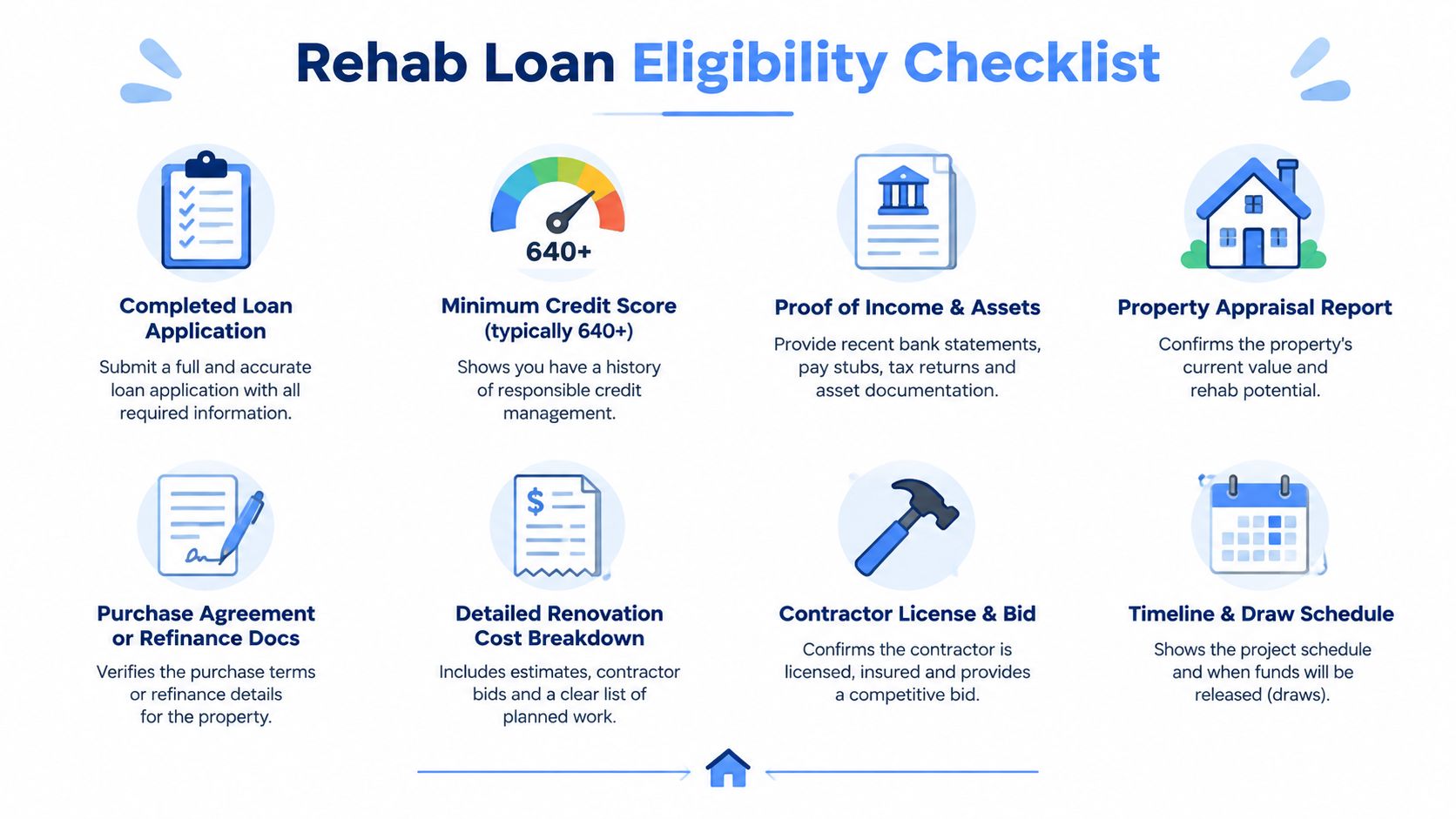
A lender can evaluate a strong deal quickly only when the file is complete. Before submitting an application, assemble a package that explains what you're buying, what you'll change, what it should be worth afterward, and how the loan will be repaid.
Build the property file first
Start with the purchase agreement or refinance documents, property address, current photos, title information, and any available disclosures. Add an appraisal request based on the completed renovation, not merely the property's present condition. FHA 203(k) underwriting requires an FHA 203(k) appraisal reflecting future value, while private lenders commonly review an ARV supported by renovated comparable sales.
Your renovation package should include:
- Detailed scope of work: Separate structural, mechanical, exterior, interior, and finish items.
- Contractor bid: Provide written pricing, projected timing, license information, and insurance documentation.
- Permit information: Identify work that may require permits and show how the schedule accounts for review and close-out.
- Draw schedule: Tie requested funds to completed milestones that an inspector can verify.
- Exit strategy: Explain whether you'll sell, refinance into long-term debt, or pursue another documented repayment path.
- Proof of funds and reserves: Show the cash available for required equity, closing expenses, carrying costs, and timing gaps.
The appraisal and contractor scope must tell the same story. If the budget calls for a modest renovation but the ARV assumes a luxury finish, the lender will question the valuation. If the appraiser sees extensive deferred maintenance that the scope ignores, approval can stall or the loan amount can shrink.
Present the deal the way the lender underwrites it
Conventional lenders typically examine income, credit, debt obligations, and property documentation together. Private lenders may place more weight on collateral value, project feasibility, borrower experience, liquidity, and the exit. That doesn't mean personal finances are irrelevant. It means the lender is judging whether the asset and plan can support repayment.
Use a concise deal summary with the purchase price, renovation budget, estimated completed value, requested loan amount, projected timeline, and exit. Keep supporting documents in clearly named files. Investors who want a more detailed preparation guide can review LendingXpress rehab loan requirements before sending a submission.
A standard mortgage pre-approval doesn't automatically qualify you for rehab financing. The lender must re-underwrite the larger acquisition-plus-rehabilitation transaction, including the repair budget, future value, contractor, and rehab-specific fees.
Calculating Loan Amounts and Managing Draw Schedules
Rehab financing is sized from more than the purchase price. The lender evaluates the total project cost, the completed value, the borrower's contribution, and the amount of risk created by the renovation plan.
A basic project model contains:
- Acquisition cost: The contract price and eligible closing costs.
- Rehabilitation cost: Labor, materials, permits, design, and other approved work.
- Carrying costs: Interest, insurance, taxes, utilities, and other property expenses during construction.
- ARV: The appraised value after the approved scope is complete.
- Exit costs: Sale expenses or refinance costs that affect repayment.
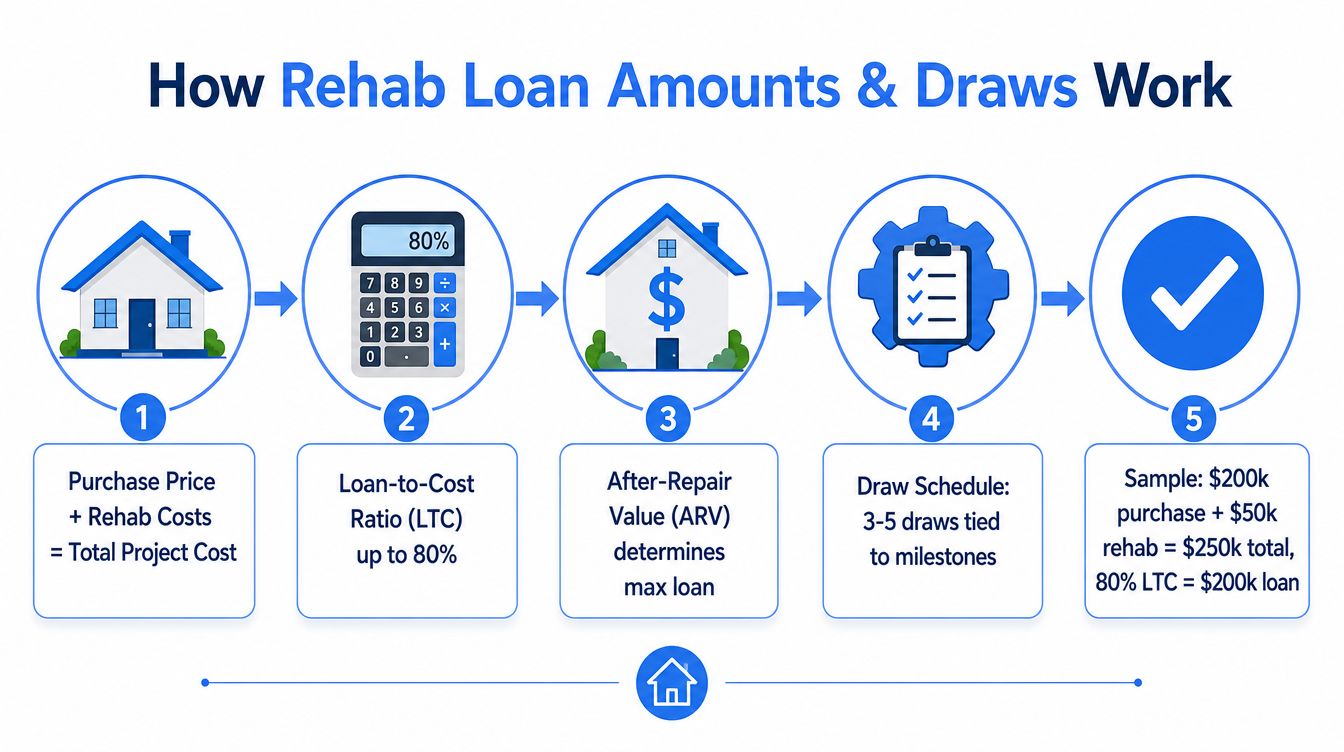
For example, suppose a property costs $200,000 and the approved renovation budget is $50,000. The total project cost is $250,000. If a lender applies an 80% loan-to-cost calculation, the resulting loan amount is $200,000, before any lender-specific adjustments. Those figures are also shown in the required process visual below.
ARV can cap the loan even when the budget works
A project can meet an LTC target and still fail the lender's ARV test. If the completed appraisal comes in below the investor's projection, the maximum loan may fall, requiring more cash at closing or making the deal uneconomical. That's why comparable sales should reflect the actual finished product, not the investor's preferred design.
The FHA 203(k) structure also ties the loan to acquisition and rehabilitation together. Borrowers generally need at least 3.5% down on the combined total for FHA purchase transactions, and lenders require contractor bids, a future-value appraisal, and underwriting documentation before approval, as described in FHA 203(k) loan guidance for borrowers.
Draws are a construction control, not a convenience
Renovation funds usually remain in escrow after closing. The contractor completes an agreed milestone, submits a draw request, and the lender orders an inspection or requires certification before releasing funds. The project closes out only after final verification and permit close-out when applicable, consistent with HUD's FHA 203(k) workflow guidance.
Build the schedule around work that can be clearly inspected. A lender may release funds after demolition, rough mechanical work, drywall, installed finishes, and final completion, but the exact sequence varies. Confirm the number of draws, inspection responsibility, turnaround expectations, fees, retainage, and whether you must front any costs.
Draw discipline: Schedule contractor milestones around inspection dates and permit lead times, not just the date you want the next payment.
Use a written schedule that names the work, documentation required, expected inspection date, and amount requested. For a deeper operational reference, review the construction loan draw schedule before signing the loan documents.
Common Pitfalls That Kill Rehab Loan Deals
The most dangerous assumption is that approval is finished once the lender issues a pre-approval. A conventional FHA or investment mortgage pre-approval doesn't automatically transfer to a rehab loan. The lender must review the completed-value appraisal, repair budget, contractor, draw mechanics, and project-specific fees.
Appraisal problems
An appraisal can fail because the selected comparables don't support the planned finish level, the scope omits major repairs, or the proposed improvements don't add enough value. Solve that before the appraisal by matching the renovation plan to nearby completed sales and asking the contractor to price every material component.
If the appraised ARV is lower than your estimate, don't increase the projected sale price. Reduce the purchase price, revise the scope, add cash, or walk away. A weak appraisal rarely becomes a strong deal through optimism.
Seller and contractor resistance
Sellers often prefer a buyer with fewer financing conditions. Your offer can compete by presenting a clean pre-qualification, a defined deposit, realistic contingencies, and a closing date confirmed by the lender. Don't promise a fast close until the lender has reviewed the actual property and documents.
Contractors can also reject programs with complicated inspections, escrow controls, or delayed reimbursement. Ask the contractor whether they can work with staged draws and whether they have enough operating capital to cover the gap between completion and payment. If not, restructure the milestones or choose a lender with a process the contractor accepts.
Occupancy traps
Occupancy rules can create a serious problem for investors who plan to move in only after renovations. Freddie Mac CHOICERenovation, for example, allows owner-occupied treatment on the delivery date only when the borrower moves in as a primary residence within 60 days after the last renovation-fund disbursement, according to its published guidance. Treat occupancy as a binding loan requirement, not a future preference.
For a pure non-owner-occupied acquisition, private or hard money financing is usually more direct. It avoids forcing an investment strategy into an owner-occupancy structure, although the lender will still require a credible exit and sufficient collateral protection.
Choosing the Right Lender and Closing Your Loan Fast
The lender matters as much as the loan category. Two lenders can quote similar terms but produce very different outcomes if one takes too long to review the scope or releases draws slowly.
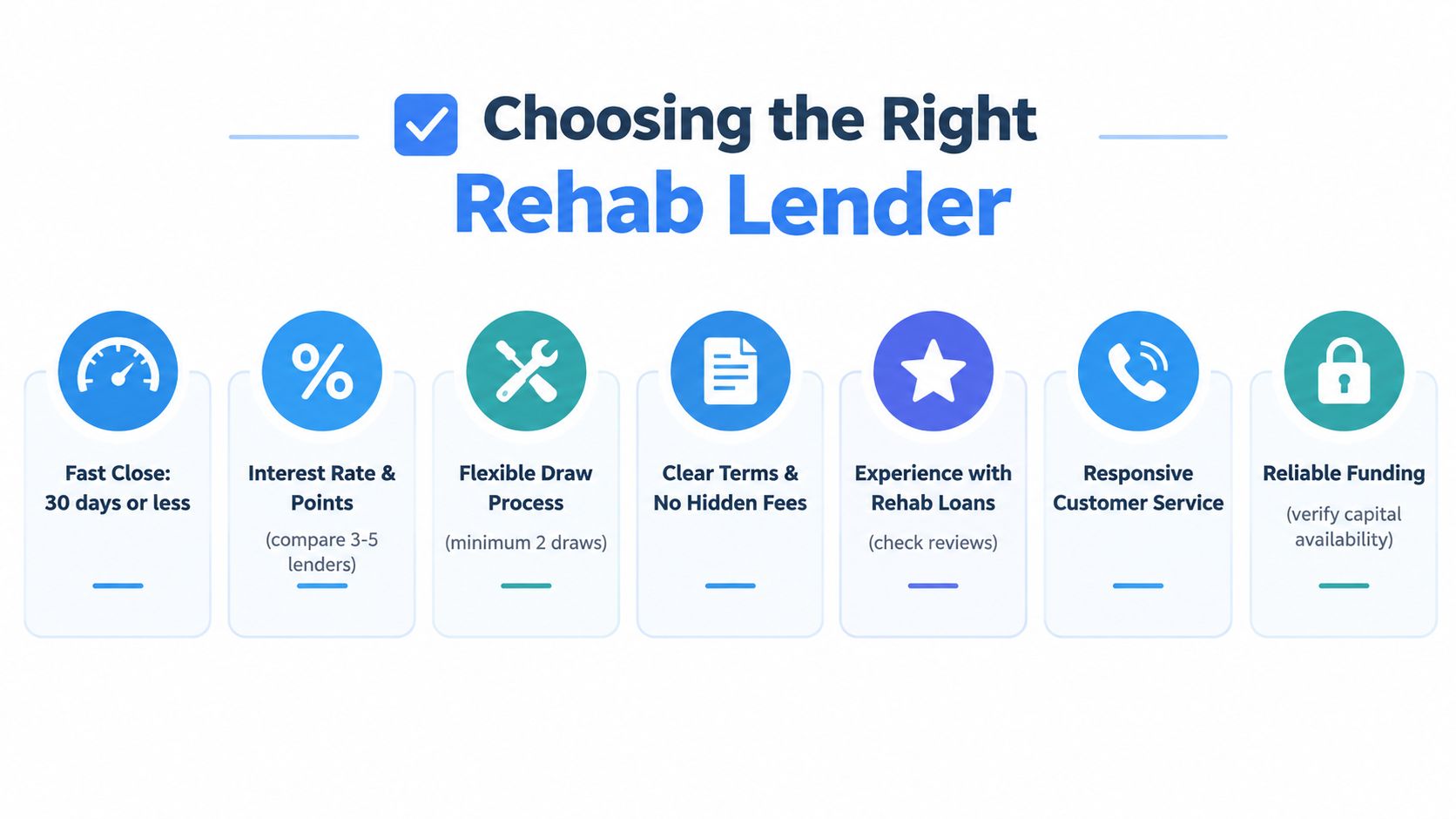
Ask each lender these questions before submitting a property:
- What is the realistic closing timeline? Get the answer for your actual file, not a general marketing promise.
- How does the lender determine ARV? Ask which comparables, appraisal format, and scope assumptions will control.
- How are rehab funds released? Confirm inspection requirements, draw request documents, payment timing, and whether the borrower must advance costs.
- What costs apply? Request a written schedule of interest, points, appraisal, inspection, extension, and other fees.
- What happens if the scope changes? A lender should explain whether revisions require approval, a new appraisal, or a formal budget amendment.
- Who handles the file? A responsive loan officer and clear point of contact can prevent small questions from becoming closing delays.
- Is capital available for this property type and size? Confirm the lender funds non-owner-occupied residential or commercial assets if that's what you're buying.
A faster closing starts with a cleaner submission
Send the purchase agreement, scope, contractor bid, ARV comparables, entity documents, proof of funds, insurance information, and exit plan together. Missing documents create separate review cycles. A complete package lets the lender identify the actual issue early, whether that's financing capacity, valuation, construction feasibility, or borrower liquidity.
Traditional programs may offer a lower-cost structure when the property and borrower fit their rules. The trade-off is a more involved approval process and less flexibility around distressed assets or urgent acquisitions. Private lenders can close faster because they use common-sense, asset-focused underwriting, but the borrower must evaluate the full cost and repayment risk.
LendingXpress structures bridge, fix-and-flip, and rental-property loans for non-owner-occupied residential and commercial assets. Its published offering includes financing up to 100% of rehab costs, staged draws, loan sizes from $100,000 to $18 million or more, and closings in as little as three days, subject to the property and file. The firm reports more than $558 million in originations and operates across California with relationship-based loan support.
Next Steps for Investors and Brokers
Investors should begin with the property, not the lender application. Confirm the purchase price, renovation scope, completed-value comparables, total project cost, available cash, and exit before asking for terms. If the deal only works with an optimistic ARV or a perfect construction schedule, it isn't ready for financing.
Use this order of operations:
- Analyze the acquisition: Verify the current condition, comparable sales, resale demand, rental potential, and likely exit.
- Price the work: Obtain a written contractor scope with line items, timing, licensing, insurance, and permit assumptions.
- Model the capital need: Include acquisition, rehabilitation, carrying costs, closing expenses, reserves, and any amount you may need to advance before a draw.
- Submit a complete file: Send the contract, scope, appraisal support, proof of funds, entity information, and exit plan together.
- Confirm execution terms: Understand inspections, draw timing, budget changes, extension provisions, and final completion requirements before closing.
Brokers can create value by matching the borrower with a lender that understands investment-property execution. A client who doesn't qualify through a traditional bank may still have a financeable asset, but only if the ARV, scope, and exit make sense. Introduce the lender early enough to review the actual deal, not just a borrower summary.
The best rehab financing isn't necessarily the loan with the lowest quoted rate. It's the structure that closes before the seller moves on, funds the work when milestones are complete, and leaves a realistic path to sale or refinance.
LendingXpress provides private bridge, fix-and-flip, rental, and rehab financing for non-owner-occupied properties, including staged funding and up to 100% of eligible rehab costs. Visit LendingXpress with your purchase details, contractor scope, ARV support, and exit plan to discuss a financing structure that fits the transaction.