
Where should your next investment dollar go? Most rankings answer with a city name. A better answer starts with what you need the property to do. Steady monthly cash flow and forced equity through renovation are different businesses, and they rarely work in the same zip code at the same price.
The eight markets below are ranked on the things that decide whether a purchase pays: rental yield, recent price growth, cap rates, job and population trends, and the depth of the rehab opportunity. National averages won't help you much. Across OECD countries, real house prices rose more than 40% on average in the decade ending in 2022 (OECD housing data), and the local numbers still decide whether your duplex clears its mortgage.
Competition is part of the math. Investors purchased 10.8% of homes sold in the United States in the second quarter of 2025 (Realtor.com Research), and much of that buying happens in exactly the affordable rental markets covered here.
You'll see Indianapolis, Cleveland, Memphis, Kansas City, San Antonio, Birmingham, the Inland Empire, and Oklahoma City. Each entry pairs a market with a strategy and a financing structure, because in several of these places the fastest path to the closing table is a private or hard-money loan rather than a bank approval. Every one ends with a concrete next step you can act on this week.
1. Indianapolis, Indiana
Indianapolis is where I'd start with cash-flow buyers. The economy spreads across healthcare, life sciences, logistics, and education, so tenant demand doesn't hinge on one employer. Entry prices stay low enough that a renovated three-bedroom on the east or northwest side leases to a working family at a rent that covers the mortgage.
The Bridge-to-Rental Play
The typical deal is a 1950s or 1960s three-bedroom that needs $25,000 to $45,000 of work. Roof, HVAC, kitchen, flooring, and often a sewer line. Buy it with a bridge loan, renovate it, lease it, then refinance into long-term rental debt once the rent is documented and the value has stabilized.
The refinance is where plans break. Federal Reserve research on commercial mortgage underwriting reports debt-service-coverage thresholds of more than 1.25 for multifamily properties, 1.50 for leased properties, and 1.70 for other commercial loans, with combined loan-to-value ratios generally capped around 70% (Federal Reserve working paper). A property that clears 1.25 on the acquisition loan can still fail the 1.50 test on the take-out, and that gap usually turns into a cash call.
Practical rule: Underwrite the refinance before you write the purchase offer, not after the drywall goes in.
- Pull rent comps within a mile: Current listings, not last year's signed leases. A $75 monthly miss on rent kills more Indianapolis deals than renovation overruns do.
- Budget for insurance and tax increases: Both move, and both come out of the same rent check.
- Use rent-based underwriting: If your tax returns don't document enough income, a DSCR-style loan qualifies on the property's rent instead.
What I'd do: buy one, stabilize it, refinance it, and only then look for the second. A portfolio built on four unseasoned properties gives you four ways to fail at once. Our loan officers can structure the bridge-to-rental sequence so you close quickly and refinance on your own timeline.
2. Cleveland, Ohio
Could an older duplex near a major employer produce reliable rent after renovation? Cleveland can reward investors who match the property to nearby tenant demand, but low purchase prices do not guarantee a sound deal. Much of the affordable housing stock needs meaningful work before it is ready to rent.
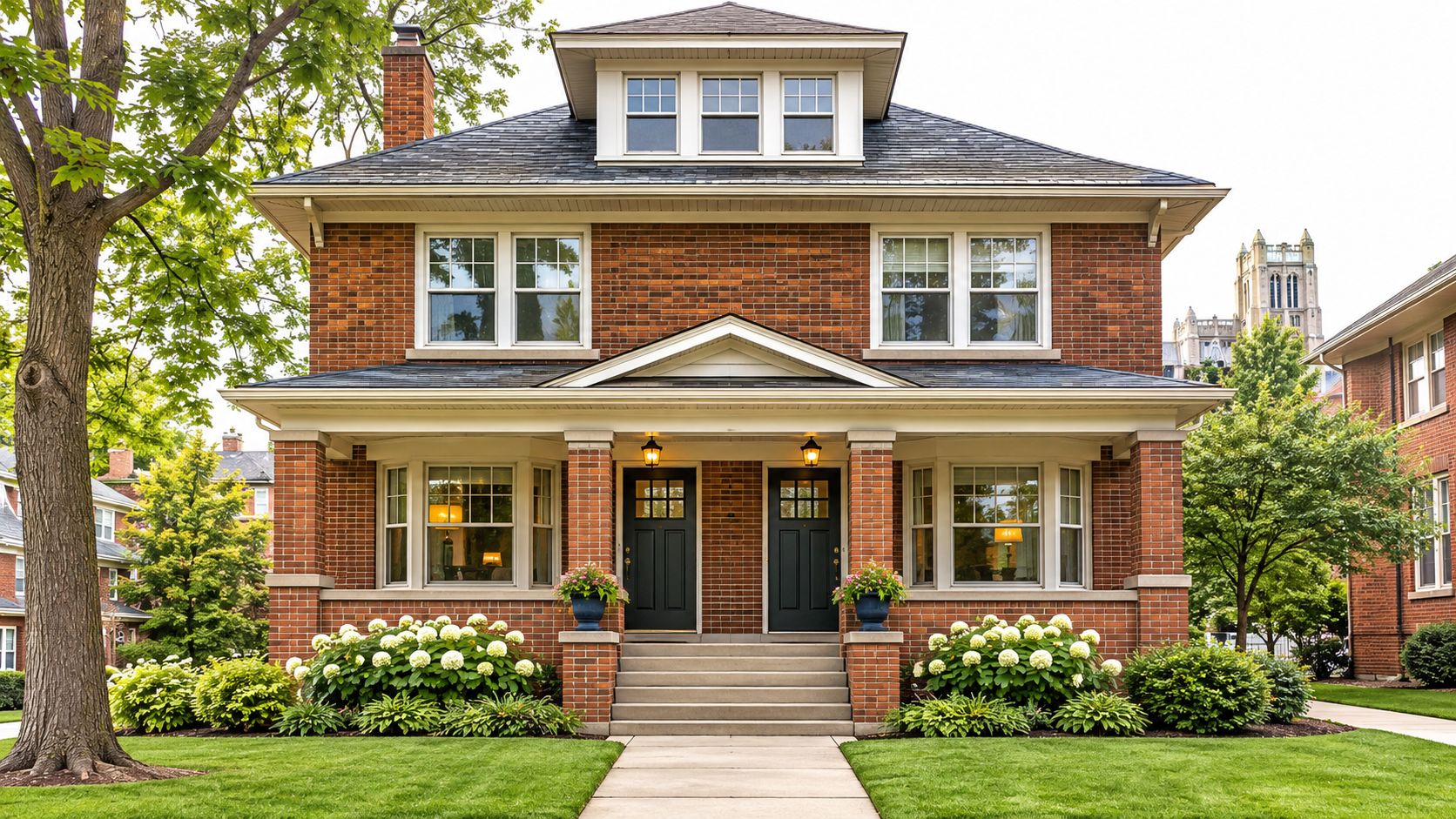
Healthcare, higher education, and research employers support rental demand in nearby neighborhoods. A practical strategy is to buy a multi-unit property, renovate it, and hold it for rental income. The trade-off is straightforward: rehab financing can help preserve cash for other costs, but the deal still depends on a realistic scope, timeline, and rent plan.
Screen by Block, Not by Neighborhood
Visit the street at different times and inspect the specific property, not just its neighborhood rating. Compare rental listings for the same unit type and check how long they remain available. Those details help test whether projected rent and tenant demand support the purchase price.
Investment-property financing usually costs more than owner-occupied financing. Fannie Mae defines an investment property as one the borrower does not occupy as a principal residence or second home, including property held or operated primarily as a rental. Such loans receive an additional loan-level price adjustment and generally must be underwritten through Desktop Underwriter with an Approve/Eligible recommendation (Fannie Mae Selling Guide on occupancy types).
Hold 10 to 15 percent for contingency on pre-1970 housing. Older homes can hide plumbing, electrical, and roofing work behind fresh paint.
LendingXpress can finance up to 100% of rehab costs, with staged draws. A documented rent plan strengthens the loan file, so prepare lease comparables before applying. The company is a California-based private and hard money lender, not an Ohio-specific financing option; its DSCR loans in Ohio page does not establish that it lends in Cleveland.
Use the walkthrough below to assess a Cleveland property before touring.
3. Memphis, Tennessee
Memphis runs on logistics and healthcare. Distribution centers, freight, and the major medical and research institutions support a large renter population, and the cost of living keeps rents affordable relative to home prices. That combination is why cash-flow buyers keep circling back to working-class neighborhoods here.
The Small-House, Light-Rehab Play
The deal most investors run is a small single-family house, light renovation, leased to employees of nearby distribution centers. Portfolio buyers then repeat it. The mistake is treating Memphis as one market: block-level differences in tenant demand are large, and a property manager's local read matters as much as the purchase price.
Scaling on rental loans changes the reserve math. Fannie Mae's automated underwriting standards generally require six months of reserves for an investment-property transaction, and additional reserves may apply when the borrower owns multiple financed properties and the new loan is secured by an investment property (Fannie Mae reserve requirements). On a $400,000 rental, the calculation can reflect property obligations and your broader financed-property portfolio, not just six mortgage payments.
- Hire a manager with real local reporting: Monthly statements, turnover reasons, and work-order logs. If you can't see the numbers, you can't price the next purchase.
- Model turnover and maintenance higher than feels comfortable: Smaller, older houses cycle tenants faster, and each turn costs a month of income.
- Use DSCR or non-QM rental loans when documentation is thin: The rent supports the loan, which is the whole point of buying a rental.
Our loan officers can walk you through financing for portfolio expansion, including cash-out on properties you already own.
4. Kansas City, Missouri
Kansas City spreads its risk across healthcare technology, financial services, logistics, and a tech sector that keeps adding jobs. Moderate home prices mean a duplex or a suburban single-family rental can still produce a defensible yield. The choice here sits between value-add in established neighborhoods and stabilized rentals in the suburbs, and both work at different points in an investor's life.
Why the Suburbs Often Win on Yield
The pricing gap between the urban core and the commuting belt is measurable. OECD regional data shows housing in urban centres is about 27% more expensive than the national average, homes in commuting zones are approximately 15% cheaper, and housing outside functional urban areas is about 34% cheaper (OECD Regions and Cities at a Glance). Urban centres also carry unoccupancy rates 2.9 percentage points below national averages, while areas outside functional urban areas run 4.6 points higher. That's the trade in one sentence: the core gives you occupancy, the ring gives you price.
For a Kansas City buyer, that points to suburbs with strong school districts and low vacancy. Buy there, and the rent roll is boring in the best way.
Exterior condition drives both rent and days on market, so run the numbers on Kansas City siding investment returns before you assume a cosmetic package pays for itself. Then do three things: compare rents and vacancy by submarket rather than metro-wide, plan for seasonal roof, HVAC, and foundation work, and confirm reserve requirements with each lender before you're under contract. We can move on a close in days when a listing demands it, and we structure conservative loan-to-value so the loan survives a soft year.
5. San Antonio, Texas
San Antonio's military, healthcare, financial, and technology employers support demand for rentals, while comparatively affordable housing gives investors room to pursue different strategies. Single-family homes near Joint Base San Antonio can suit tenants connected to the military community; duplexes and fourplexes near employment centers offer multiple rent streams. The choice depends on the property's condition, operating costs, and financing.

For a rent-ready home, long-term rental financing can support portfolio growth. A property that needs work or a quick close may call for a bridge or hard money loan, particularly when traditional financing is unavailable. Compare the cost and terms of each structure against the time needed to complete repairs and stabilize rent.
The Insurance and Tax Line Item
Property taxes and insurance premiums have been rising in many markets, as discussed in Arbor's multifamily market report. A lower purchase price does not guarantee a lower ownership cost: premiums, deductibles, exclusions, and reassessments can all affect the numbers.
Before making an offer, model taxes, insurance, and maintenance under a stressed scenario. Get quotes for the specific address.
- Compare newer construction with older stock: A lower-priced property may need more maintenance, so compare expected repairs with the rent it can support.
- Request an address-specific insurance quote: Roof condition and flood exposure can affect coverage and cost.
- Match the loan to the strategy: For a rental hold, consider long-term rental financing. For a renovation or time-sensitive purchase, compare bridge or fix-and-flip financing and account for the cost of borrowing.
Know the local process for tenant disputes before one arises. Preparing for a Justice of Peace hearing can help landlords understand what to expect. Compare a single-family purchase with a small multifamily deal by looking at reserves, repair needs, and the financing each requires.
6. Birmingham, Alabama
Birmingham's healthcare, banking, and education employers support demand for rental housing. For value-add investors, the opportunity is often an older home near a hospital or university, where renovation can improve its appeal to tenants. The trade-off is that deferred maintenance can quickly consume the expected spread between purchase cost and rental income.
Renovate First, Refinance Second
Target a property near medical or university employers, complete the needed repairs, then lease it to healthcare workers or students. Keeping rent slightly below market may help retain reliable tenants, though the lower rent reduces monthly income. Compare that cost with the expense and vacancy risk of tenant turnover.
Refinance proceeds depend on the lender's loan-to-value and debt-service coverage standards. If the new loan does not cover your expected payoff, you may need to bring additional equity or hold the property longer. Size your purchase and renovation budget with that possibility in mind.
- Prioritize proximity to medical and university employers: A steady pool of potential tenants can support renewals, but property condition and rent still affect retention.
- Budget for plumbing, electrical, and roofing: Older homes may need work beyond cosmetic updates, so inspect major systems before setting your rehab budget.
- Use rehab financing, then refinance into a rental loan: Staged draws can match funding to construction progress. Confirm the refinance terms and reserve enough cash to manage a lower-than-expected valuation or loan amount.
LendingXpress offers Fix & Flip Loans, Bridge Loans, and long-term Rental Property Loans. For a renovation purchase, compare the short-term financing cost and draw schedule with the rental loan terms you expect to qualify for after repairs.
7. Inland Empire, California (Riverside and San Bernardino Counties)
The Inland Empire is the warehouse engine east of Los Angeles: freight corridors, port-linked logistics, and a growing population that needs somewhere to live. Prices run higher than the Midwest and the South, and rents have historically been strong enough to carry them. For an investor who wants California exposure without coastal pricing, this is the entry point.
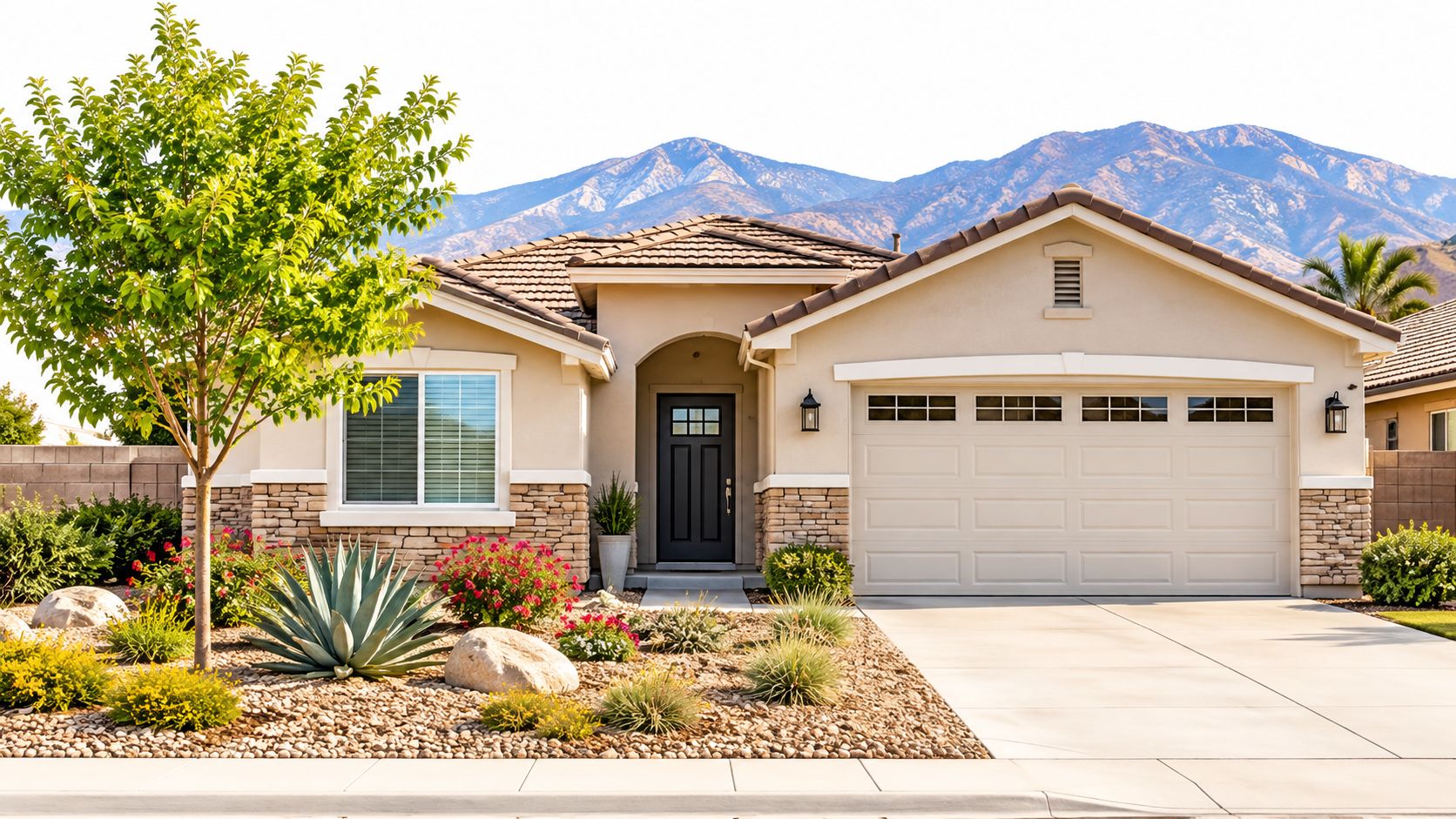
Two strategies dominate. Buy a single-family home in Riverside or San Bernardino County and lease it to logistics and warehouse workers. Or take a distressed house with a hard-money loan, renovate it, and refinance into a rental instead of selling into a slow listing.
Speed Wins Deals Here
Chasing appreciation alone is a mistake, and the fastest-growing cities in the world show why. Dubai and Miami recorded approximately 50% average real home-price growth over the five years covered by the 2025 index (UBS Global Real Estate Bubble Index). Growth like that looks excellent in a spreadsheet and squeezes yield at the entry price you pay. Inland Empire buyers should compare rent to the mortgage payment city by city, not county by county.
- Check vacancy and rent growth by city: Riverside and San Bernardino behave differently, and so do the smaller cities between them.
- Accept compressed cash flow at higher price points: Appreciation carries a thin deal only if you can hold through a soft year.
- Price the renovation before you bid: Scope, permits, and draw schedule, not a guess from the listing photos.
LendingXpress is California-based, and bridge loan financing in California lets you close on a distressed property in days rather than weeks, so you aren't the buyer who lost the house to a 21-day appraisal contingency. Our team can pair that bridge loan with a DSCR refinance once the unit leases.
8. Oklahoma City, Oklahoma
Oklahoma City runs on energy, aerospace and defense, healthcare, and government employment. None of those sectors disappears overnight, the cost of living is low, and home prices are low enough that gross yields hold up. A revitalized downtown and expanding suburbs give you a menu: older single-family homes near districts that have already turned, or newer rental stock further out.
Check the Supply Pipeline Before the Rent Roll
Headline rent growth can hide a supply problem. Recent market analysis found softer renter demand in several fast-growing Sun Belt metros after heavy construction, while demand stayed strongest in supply-constrained, high-wage markets such as San Francisco, San Jose, New York, and Chicago (Arbor multifamily market analysis). The lesson travels. Compare permitting and delivery pipelines against job creation, vacancy, concessions, and renter-income growth. Strong nominal rent growth still produces weak returns if new apartments force concessions.
Ask one question before you buy.
How much competing supply is scheduled to arrive before my property reaches stabilized occupancy?
- Watch energy employment: It moves rent demand more than national headlines do.
- Budget severe-weather insurance and roof maintenance: Both recur, so treat them as fixed costs rather than surprises.
- Use non-owner-occupied financing that leans on property income: A strong rent roll is better evidence than a tax return that understates you.
Our loan officers can map a purchase, rehab, and refinance timeline against your goals so the exit isn't a guess.
Top Property Investment Markets at a Glance
| Market | Entry Price Level | Primary Tenant Demand Driver | Best Strategy | Financing Approach |
|---|---|---|---|---|
| Indianapolis, Indiana | Relatively affordable | Healthcare, life sciences, logistics, and education jobs | Buy and renovate single-family rentals in stable neighborhoods | Bridge financing followed by a DSCR or long-term rental loan |
| Cleveland, Ohio | Among the lowest for major metros | Healthcare, universities, and medical campuses | Screen neighborhoods carefully; renovate older homes or duplexes and hold | Rehab or bridge loan, followed by a rental loan after stabilization |
| Memphis, Tennessee | Low | Logistics, distribution, healthcare, and research employers | Target working-class areas and budget carefully for management and maintenance | DSCR or other investor purchase and refinance loans |
| Kansas City, Missouri | Moderate | Healthcare technology, financial services, logistics, and tech jobs | Choose between value-add homes and stabilized rentals by submarket | Rental purchase, cash-out refinance, or bridge loan |
| San Antonio, Texas | Relatively affordable | Population growth and military, healthcare, financial, and tech employers | Buy single-family or small multifamily near job centers | Investor purchase, bridge, or rental refinance loan |
| Birmingham, Alabama | Low | Healthcare, banking, universities, and medical campuses | Renovate older homes near major employers and hold as rentals | Rehab or bridge loan, followed by a long-term rental loan |
| Inland Empire, California (Riverside and San Bernardino Counties) | Higher than Midwestern and Southern markets; below coastal California | Logistics, warehouses, and freight-related employment | Compare city-level rents and costs; consider value-add rentals | Hard money or bridge financing, followed by a DSCR loan |
| Oklahoma City, Oklahoma | Affordable | Energy, aerospace, defense, healthcare, and government employment | Buy and hold near revitalized districts or growing suburbs | Investor purchase, rehab, or refinance loan |
Pick Your Market, Then Pick Your Financing
A market and a loan have to fit the same plan. Cleveland may suit a rehab budget, San Antonio calls for careful insurance underwriting, and the Inland Empire can reward a buyer who is ready to move quickly. Match the financing to the work and the expected hold: bridge financing can fund an acquisition or refinance, while a rental property loan is designed for long-term financing of income-producing property.
Capital conditions also affect how buyers compete. Global real estate investment volume rose 8.2% in 2025 compared with 2024, while North America recorded a 15.4% increase, according to Colliers' global capital flows report. When other buyers are pursuing the same assets, financing that can close without waiting out a bank's lengthy contingency period may strengthen your negotiating position. Weigh that speed against the loan's cost and terms.
Transparency matters at purchase and resale. JLL's 2024 Global Real Estate Transparency Index assessed 89 countries and 151 city markets, ranked the United Kingdom first, and reported that more than 80% of global real estate investment goes to highly transparent markets (JLL's transparency rankings and methodology). For a local deal, check the quality of transaction records and how clearly contracts define each party's obligations.
Four Steps Before Your Next Offer
- Set the primary goal. Choose cash flow, appreciation, or rehab equity, then make the underwriting reflect that priority.
- Narrow the search to two markets. Identify the employment base and likely tenant profile in each before comparing properties.
- Stress-test operating costs. Model insurance, taxes, and vacancy. If the property only works at 95% occupancy, reassess the rent, price, or expenses.
- Get pre-qualified before shopping. Confirm the likely loan amount, required reserves, and closing timeline before making an offer.
Buying well does not guarantee strong operations. Before taking on management yourself or hiring someone, review the skills every rental asset manager needs. Choose a manager who can handle the property's actual needs, from tenant coordination to maintenance oversight.
LendingXpress is a California-based private and hard money lender offering bridge, fix and flip, and rental property loans secured by residential or commercial real estate. Loans are available for properties valued from $100,000 to $18 million and beyond. Fix and flip financing can cover up to 100% of rehab costs, with staged draws. Its loan pre-qualification tool matches a scenario to lenders in seconds, with no commitment required.
The right structure depends on the deal's timeline and exit plan. A bridge loan can support a quick acquisition or refinance, while a rental property loan is built for long-term financing of an income-producing property. LendingXpress offers financing when traditional options fall short, including for transaction funding or cash out. Start pre-qualification at LendingXpress to assess a financing option for your next property.