
You found a non-owner-occupied property that could work as a flip, rental, or bridge play. The seller says they can close fast. Your contractor likes the scope. Your numbers still pencil.
Then the first real question shows up. Who owns it, and can that party legally sell it?
That question decides more deals than most investors want to admit. If ownership is wrong, unclear, or buried behind an entity nobody bothered to check, the rest of your underwriting doesn't matter. The deal slows down, the lender asks for more documents, title flags an issue late, and your closing window starts to slip.
Knowing how to verify property ownership is one of those skills that separates investors who move cleanly from investors who constantly chase preventable problems. It matters even more when you're buying distressed property, inherited property, or anything held in an LLC or trust. Generic homebuyer advice usually stops at "check county records." That isn't enough when speed and certainty matter.
Your Next Deal Depends on Due Diligence
A lot of investors run the same play. They lock onto the property first and assume the paperwork will sort itself out later. That's backwards.
If you're trying to buy a rental house from a tired landlord, a small apartment building from an LLC, or a probate property with deferred maintenance, ownership verification isn't clerical work. It's the first test of whether the deal is even financeable. Lenders look at collateral, but they also look at whether the borrower understands the deal they're bringing in.
A simple example. An investor sees a discounted off-market property and gets a signed purchase contract fast. The public listing history is thin, the seller is using a company name, and everyone is pushing for a short closing. On paper, that sounds like opportunity. In practice, it's where title problems hide.
Practical rule: If you can't identify the current owner and the person with authority to sign, you don't have a clean deal yet.
Strong investors treat ownership verification as part of underwriting, not as an afterthought. That's the same mindset behind broader due diligence work in any transaction. If you want a useful outside read on avoiding risks in business, the core lesson is the same. Verify first, move second.
Speed still matters. But clean speed wins. The investor who can show a clear ownership path, explain any odd filing, and flag title issues early is easier to underwrite, easier to close, and far less likely to blow up in escrow.
Start Your Search at the Official Source
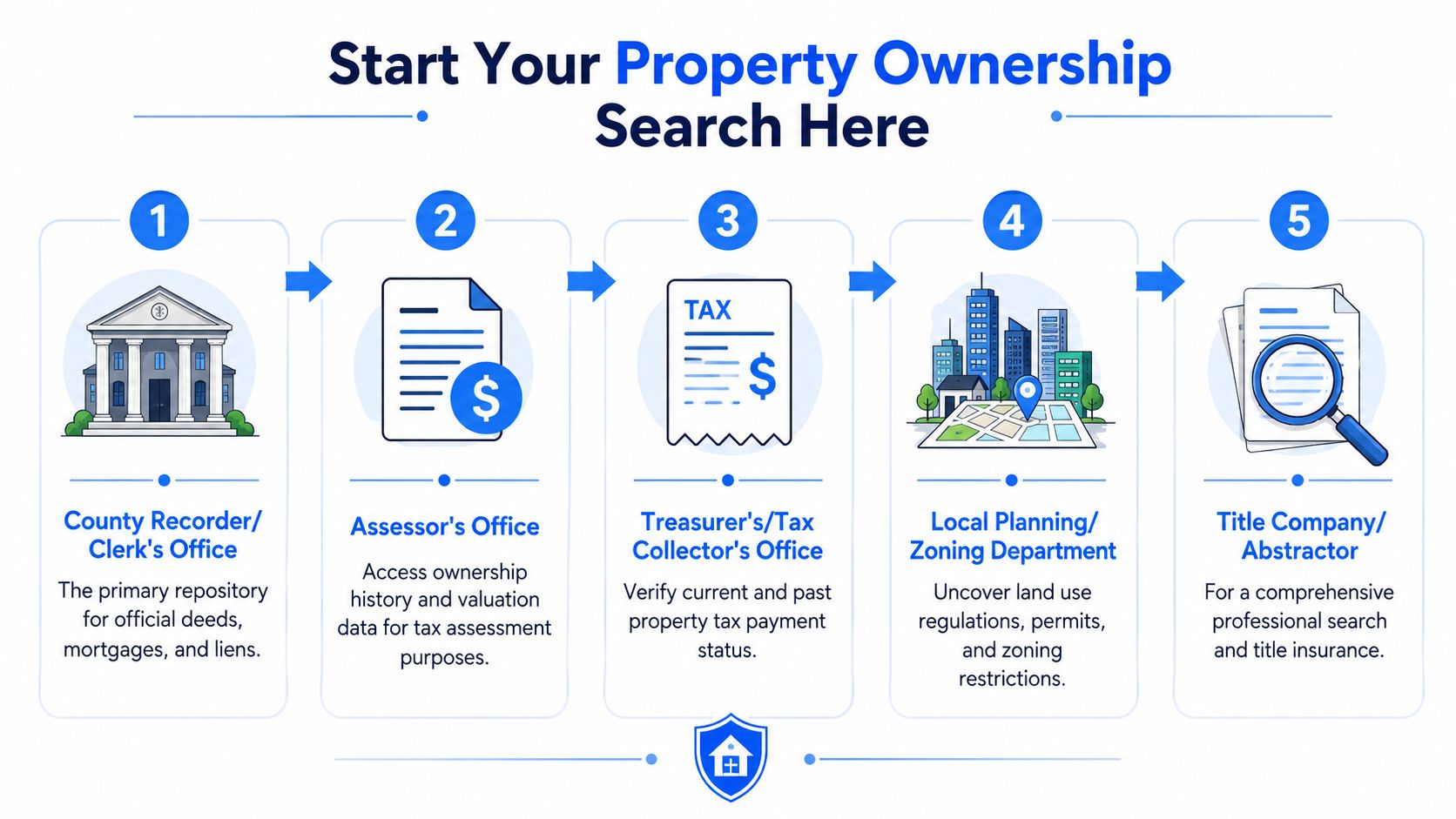
Start at the county, not with a seller's story, a skip trace, or a property data app. For underwriting, the fastest reliable answer usually comes from the public office that records the deed.
Pull the deed first
The county recorder, recorder-clerk, or register of deeds is the first stop. That office usually holds the recorded deed, mortgage, assignment, lien release, and other filings that shape whether a deal can close on time.
If the portal gives you more than one way to search, use the field least likely to produce noise:
- APN search if you have it.
- Street address if you do not.
- Owner name only after that, especially if the property may be held in an LLC or trust.
Your target is the most recently recorded deed. That document shows the latest recorded grantee, which is the starting point for figuring out who owns the property on paper today.
For investors, that matters for more than curiosity. A contract can be signed by the wrong person. An LLC manager can claim authority without showing it. A trustee can be named in conversation but not in the recorded chain. Public records give you the first clean answer before legal review starts.
Use assessor and tax records to test the story
The recorder tells you who took title. The assessor and tax collector help you confirm you're looking at the right parcel and whether the ownership story hangs together.
Check the assessor site for:
- APN and situs address: Confirm the parcel and street address match your file.
- Owner field: Useful as a cross-check, but not final proof by itself.
- Property details: Use type, lot size, and building data can expose a wrong-property mistake fast.
Check the tax collector or treasurer site for:
- Tax status: Delinquent taxes can affect closing costs and timing.
- Billing name and mailing address: Helpful for spotting absentee owners, entity ownership, or trust administration issues.
- Payment history or tax notices: These can reveal inconsistencies that deserve a second look.
Small mismatches matter. If the deed shows "123 Main Street Holdings LLC," the tax bill goes to an individual in another state, and the contract is signed by someone calling himself a partner, slow the file down and verify authority before you spend money on appraisal, insurance, or hard deposit funds.
A practical search sequence
I use a simple order on investment deals because speed matters, but rework matters more.
| Record source | What to confirm | Why it matters |
|---|---|---|
| County recorder | Most recent deed and related recordings | Identifies the latest recorded grantee and surfaces filed documents that may affect authority or title |
| Assessor | APN, situs address, owner field, property profile | Confirms you are underwriting the correct parcel |
| Tax collector | Delinquencies, billing name, mailing address | Flags payment issues and ownership inconsistencies |
| Secretary of State or business registry | LLC status, registered agent, managers if listed | Helps confirm whether the entity on title is active and who may be authorized to sign |
| Planning or zoning | Use, permit history, zoning fit | Helps if your exit depends on renovation, short-term rental use, or redevelopment |
If your file involves deed structure questions, a quick review of property financing contract types can help you separate title documents from loan documents before you start calling people the owner.
What works, and what wastes time
Matching records across departments works. Relying on a listing sheet, a lead platform, or a screenshot from the seller wastes time and creates avoidable closing problems.
County portals are not perfect. Some are missing images. Some index names poorly. Some split address formats so badly that one search returns nothing and another returns the whole file. Good investors do not force certainty out of bad data. They call the recorder, ask how the parcel is indexed, and order certified copies if the online record is thin.
That extra step saves deals. It also helps lenders like LendingXpress underwrite faster, because a file with clean ownership support gets to credit questions sooner.
How to Read Deeds and Trace the Chain of Title
A deed isn't hard to read once you know what matters. The problem is that many investors stare at the document and miss the few fields that answer the underwriting question.
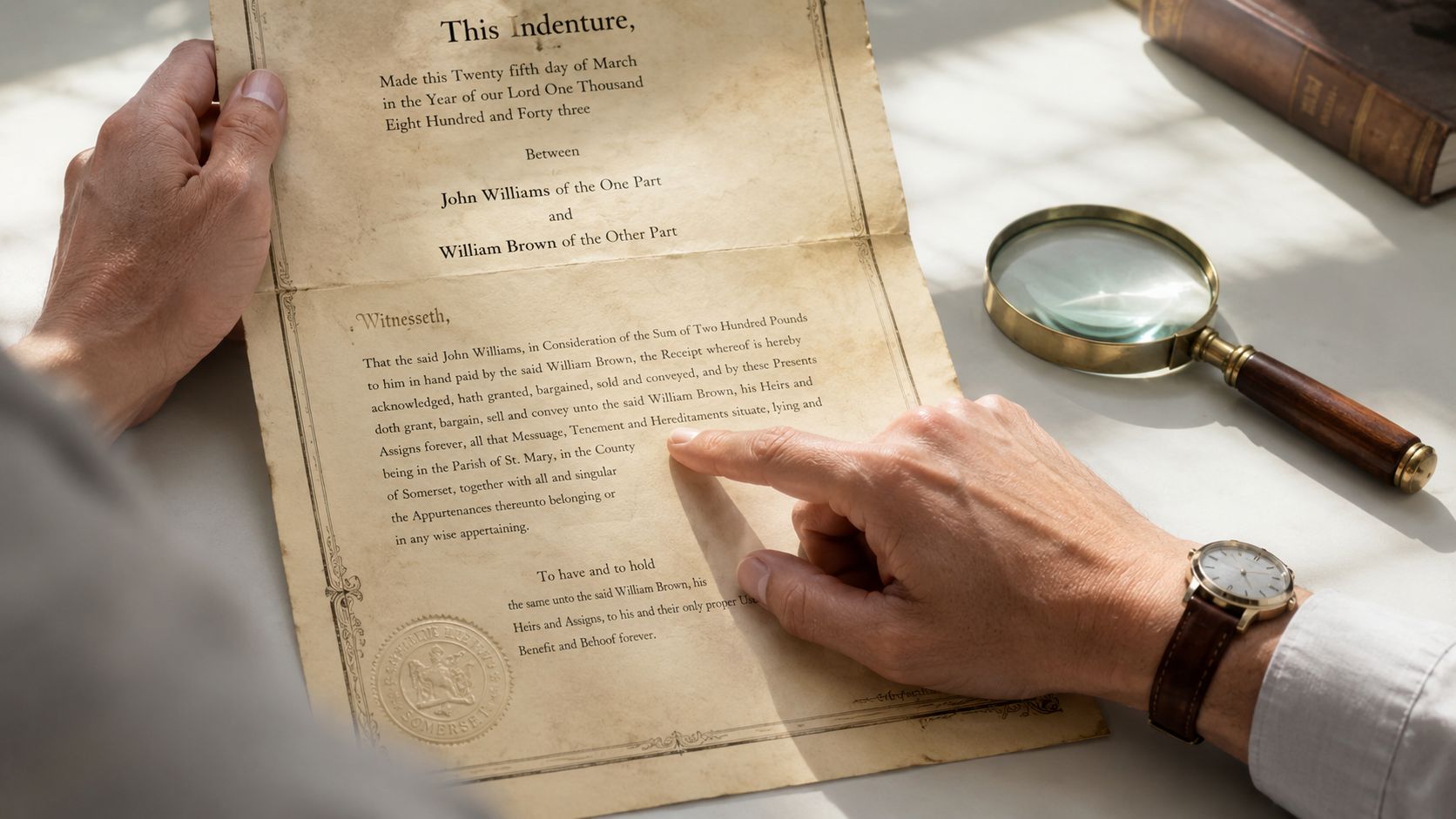
The key names are simple. The grantor is the party giving the property. The grantee is the party receiving it. The legal description identifies the actual real estate being transferred, which matters more than the casual street address if there's ever a conflict.
Read the deed like an investor
When you open the most recent deed, check these items before anything else:
- Grantor and grantee names: Are they consistent with the contract and seller story?
- Recording date: Recent recordings can change your whole file.
- Legal description: This needs to match the parcel you're financing.
- Signature block and notary details: Odd signatory language can point to an authority issue.
- Document type: Grant deed, quitclaim deed, trustee's deed, personal representative's deed, and other forms don't all carry the same practical implications.
A lot of confusion starts because investors mix up deed types with loan documents. If you need a clean refresher on property financing contract types, it helps to separate title transfer documents from security instruments.
Trace the ownership trail
Finding the latest deed isn't enough when the deal looks messy. You need the chain of title, meaning the sequence of transfers that led to the current owner.
That process usually looks like this:
- Pull the current deed.
- Identify the prior deed reference listed on that document.
- Pull the earlier deed.
- Repeat until the ownership history makes sense.
You're looking for continuity. Owner A conveyed to Owner B. Then Owner B conveyed to Owner C. If there's a jump, conflicting legal description, or a deed from someone who never clearly received title, stop and investigate.
Don't treat an online summary as final proof. The actual recorded document controls.
The technical process often starts with the APN to locate the most recent deed, but a common mistake is assuming the online abstract tells the full story. For a clean title, you need to confirm that satisfaction of mortgage documents were recorded, because liens are generally treated as active unless a release appears in the record (title search warning on releases and online abstracts).
Here's a useful training aid if you want to see deed and title concepts explained visually:
What usually trips people up
The deed says one thing. The contract says another. The LLC name is abbreviated differently. A mortgage appears, but no release does. Those are the details that delay closing.
A good investor doesn't need to be a title officer. But you do need to know when the chain looks normal and when it doesn't.
Verifying Ownership for LLCs and Trusts
A lot of investors still assume an address search is enough. It isn't, especially on investment property.
Over 40% of commercial and multi-family investment properties in major U.S. markets are held under LLCs, and standard address searches often return only the entity name. That means you usually need a separate Secretary of State search to trace who controls the entity and who can sign for it (LLC ownership gap in public property searches).
Why the county search stops short
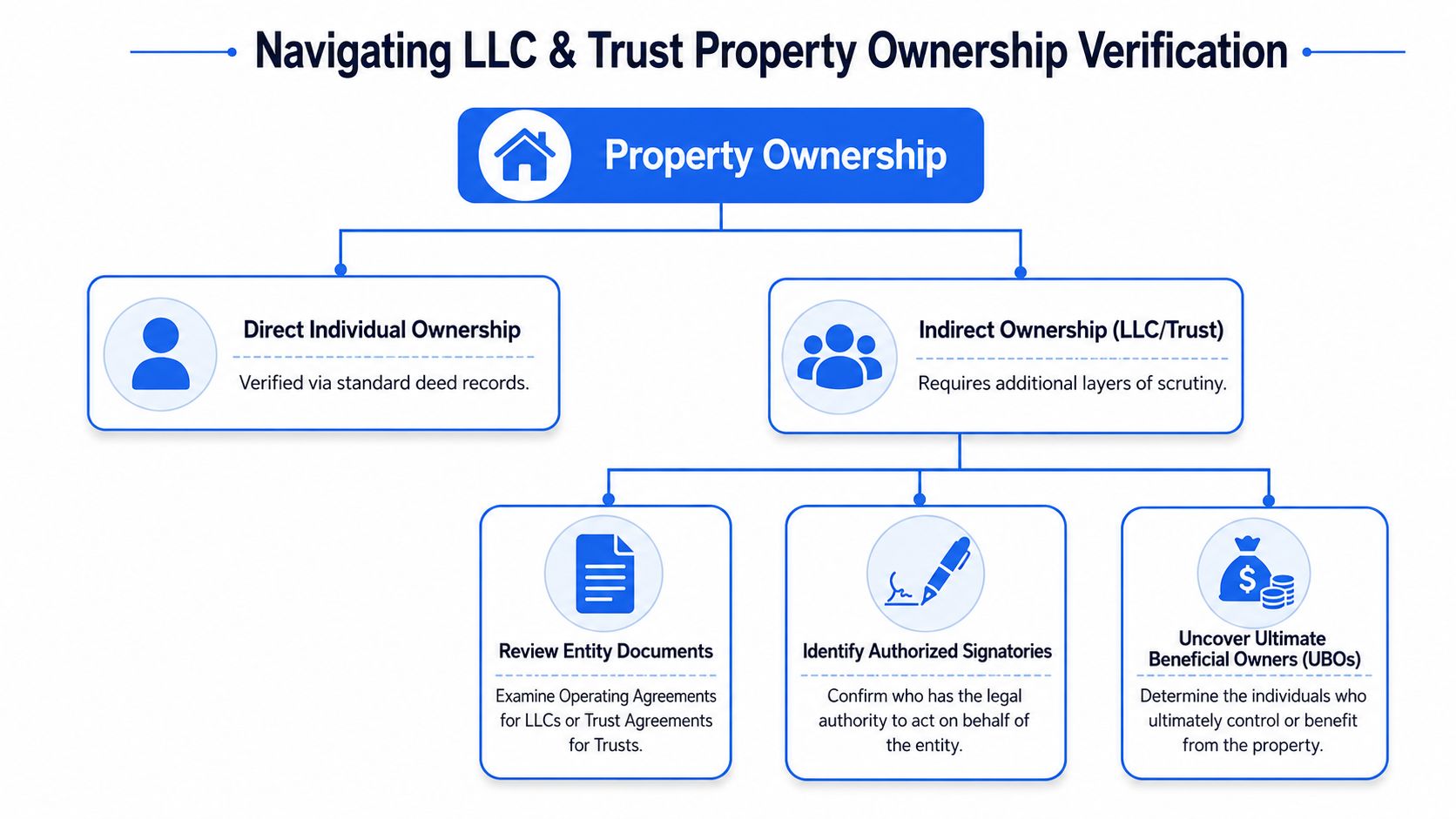
The county deed may tell you the owner is 123 Main Street Holdings LLC. That's useful, but incomplete. It doesn't automatically tell you who manages the LLC, whether the entity is active, or whether the person signing the sale contract has authority.
For trust-owned property, the county record may show the trust name or a trustee name. That still doesn't tell you enough. You need to know whether the trustee is current and whether the trust terms allow the sale.
What to check next
For an LLC-owned property, review these items:
- Secretary of State filing: Confirm the entity exists and is in good standing if the state provides that status.
- Manager or authorized person data: Some states show managers, members, or registered agents. Use that as a lead, not as final proof.
- Operating agreement or member resolution: This is often needed to confirm sale authority.
- Name consistency: The deed, purchase contract, and entity records should line up exactly.
For a trust-owned property, request:
- Certification of trust or trust excerpts: Enough to confirm trustee identity and authority.
- Current trustee information: Don't assume the named trustee on an old deed is still acting.
- Supporting death or succession documents if applicable: Trustee changes often create confusion.
Entity ownership isn't a problem by itself. Unverified authority is the problem.
What lenders and serious buyers care about
If an LLC is the record owner, the key question becomes, who controls that LLC for this transaction? If a trust owns the property, who has the power to convey title today?
Those questions matter in every fast-moving file. Investors who buy in entities should also think about how they present their own structure when borrowing. If you're evaluating whether holding title in a company makes sense, this overview of real estate investing through an LLC is worth reviewing before you get deep into the next acquisition.
The biggest mistake here is trusting a person just because they're responsive. Responsive doesn't mean authorized. Verify both.
Identifying Red Flags and Common Title Defects
Most ownership issues don't look dramatic at first. They show up as a stale mortgage, a boundary question nobody resolved, an inherited property where the family assumes they can sell, or a deed that was recorded without cleaning up an earlier problem.
That's why title defects are so dangerous in investor deals. They don't just create legal risk. They also slow underwriting, force document conditions late, and can make a loan impossible to close on schedule.

The defects that kill momentum
The most common red flags usually fall into a few buckets.
- Unreleased liens: A mortgage, mechanic's lien, tax lien, or judgment that still appears active can stall title clearance.
- Bad legal descriptions: If the deed describes the wrong parcel or an incomplete interest, your collateral may not be what you think it is.
- Boundary and encroachment issues: A survey can reveal that fences, driveways, or structures don't match the recorded lines.
- Questionable filings: Secret deeds, suspect powers of attorney, or odd late recordings deserve immediate scrutiny.
- Heirship and probate problems: These can leave title clouded even when everyone involved believes the property is sellable.
A lien issue can also affect priority. If debt stacks are changing in the transaction, concepts like lien order matter. In such cases, a borrower should understand how subordination agreements work because title and payoff structure often intersect.
Probate needs extra care
Inherited property deserves a slower, more disciplined review. Public records often lag behind the actual legal status after an owner's death, and in states like California, up to 15% of distressed property sales involve probate-related title defects (probate-related title defect risk in distressed sales).
That matters because investors often target inherited or distressed assets precisely where title can be least settled. A family member may market the property before probate is complete. A personal representative may not yet have clear authority in the file. An affidavit, court order, or probate document may be required before title can insure the transfer.
If the owner is deceased, don't assume the person cleaning out the house has the power to sign a deed.
A quick red-flag review before you spend more money
Use this checklist before you order deeper third-party work:
| Red flag | What it may mean | What to do |
|---|---|---|
| Seller name doesn't match deed | Wrong seller or missing transfer | Ask for the recorded transfer path |
| Mortgage appears with no release | Active lien may remain | Require payoff and recorded release review |
| Trust or LLC owns property | Authority may be unclear | Request entity or trust documents |
| Owner is deceased | Probate may be incomplete | Verify legal authority before proceeding |
| Legal description mismatch | Wrong collateral risk | Compare deed, assessor data, and title work |
What not to do
Don't let the seller's confidence substitute for documentation. Don't accept "we'll clear it at closing" as a complete answer. And don't spend heavily on appraisal, rehab planning, and closing prep before you know whether title can be delivered cleanly.
Investors who keep their losses low usually aren't luckier. They just spot title trouble earlier.
Engaging Professionals for a Faster, Safer Close
A deal can look clean in county records and still blow up three days before closing.
I see that happen when an investor does enough research to get comfortable, then waits too long to order title or legal review. By the time the problem shows up, the appraisal is done, insurance is lined up, contractors are scheduled, and the seller is threatening to walk. Speed matters, but speed without verification is how investors lose deposits and miss rate locks.
Professional title support earns its keep by finding issues early enough to fix them. A title company, abstractor, or real estate attorney reads recorded documents for a living. They catch missing releases, defective legal descriptions, stale probate issues, unsigned trustee certifications, and LLC authority gaps that can stall funding even when the seller insists everything is fine.
When to bring in help
Bring in professional support early if any of these are true:
- The ownership path is unclear. Multiple deeds, family transfers, probate filings, or long gaps in recording need a formal search.
- An LLC or trust is involved. You may need operating agreements, certificates of authority, trust certifications, or other documents to confirm who can sign.
- The deal has a short closing timeline. Curative work takes time, especially if a release, payoff, or estate document is missing.
- You are putting real money into due diligence. Before you spend on appraisal, insurance, rehab planning, or lender conditions, make sure the seller can deliver insurable title.
The cost of a title search or attorney review is usually small compared with the cost of a delayed or failed closing. For an investor, the bigger risk is not the invoice. It is finding out too late that the borrower, seller, or vesting entity lacks authority to transfer the property.
What professionals actually add
A professional does more than confirm the owner name. The job is to determine whether title is insurable and whether the closing package will hold up under lender scrutiny.
That includes reviewing:
- Chain of title continuity
- Open liens, judgments, and unreleased mortgages
- Entity authority for LLC-owned property
- Trustee authority and trust documentation
- Probate filings, heirship issues, and court approvals
- Legal description consistency across deed, title work, and loan documents
- Title insurance requirements and exceptions
This matters even more on investor deals because underwriting looks at the file differently. If title shows ownership in an LLC, but the purchase contract is signed by an individual with no authority documents, the file stops. If a trust owns the property and the trustee certification is incomplete, the file stops. Those are avoidable delays.
Pay for clarity early. It is cheaper than repairing a closing that was built on assumptions.
Why this helps underwriting move faster
Lenders can move quickly when the title and authority questions are already organized. A clean title commitment, signed entity documents, and a short explanation for any odd recording history give underwriting what it needs to size risk and issue conditions that can be met.
That does not guarantee an easy file. It gives you a real file.
Serious investors use professionals the same way they use inspectors and contractors. Not to replace judgment, but to verify the parts of the deal that can kill a closing if they are wrong.
Secure Your Next Investment with Confidence
The fastest closings usually start with the most disciplined prep. Not the flashiest deal. Not the loudest seller. The cleanest file.
If you want to know how to verify property ownership the right way, keep the sequence tight. Start with the official county records. Read the deed instead of relying on a summary. Trace the chain of title when anything looks off. Go deeper when the owner is an LLC or trust. Treat liens, probate issues, and legal description problems like underwriting issues, because that's exactly what they are.
That approach doesn't just protect you from fraud or title surprises. It also makes you a stronger borrower. Lenders and closing teams can move faster when you've already done the hard part of identifying the owner, the authority path, and the obvious defects.
The investors who close consistently aren't guessing less because they have easier deals. They're guessing less because their process is better. They know when a property is ready to finance and when it isn't.
If you're buying, refinancing, or repositioning a non-owner-occupied property and need a lending partner that understands investor timelines, LendingXpress can help you move quickly with practical underwriting and reliable execution.